
Unbound At the Table — After the Feast — with the Cocktail Diaries
Once the big meals are over, the table changes. It gets smaller. More honest. There’s no need to impress anyone now. No need for spectacle or abundance for its own sake. What’s left is what was worth keeping. With a twist on the Old Fashioned in The Cocktail Diaries.
AT THE TABLE — WITH THE COCKTAIL DIARIESUNBOUND SERIES
Dianna Ishtar
1/11/20262 min read
There’s a particular quiet that arrives after celebration.
Not the silence of absence — but the stillness that follows excess. Plates stacked. Bottles half-finished. The sense that the important part has already happened, and now it’s time to see what remains.
Early January has always felt like that to me.
Not a beginning — a cooling.
After the Feast
Once the big meals are over, the table changes.
It gets smaller. More honest. There’s no need to impress anyone now. No need for spectacle or abundance for its own sake. What’s left is what was worth keeping.
This is the moment I love most.
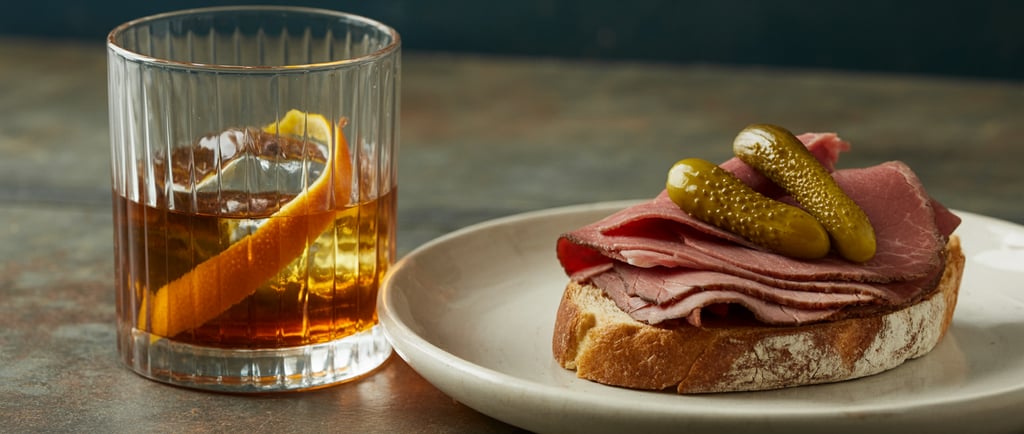
Leftover roast meat, sliced properly and eaten cold. Toasted bread with enough structure to hold it. Mustard. Pickles. A good crusty loaf that doesn’t apologise for itself.
Cold meat done properly.
It’s not a second-best meal.
It’s a reckoning.
Kitchens That Knew How to Stretch
This way of eating isn’t new.
Early colonial kitchens were built on practicality — not out of thrift alone, but out of necessity. Nothing wasted. Everything repurposed. The same kitchens that fed many one day learned how to feed fewer the next.
Food had to last.
So did people.
There’s a particular kind of skill in knowing how to make something carry. Not bigger. Not brighter. Just sufficient — and honest.
What Stands Beside It
After a feast like that, I don’t want ice. I don’t want novelty. I don’t want distraction.
For this table, I imagine the Old Fashioned made the same way as the brandy version (p. 43) in The Cocktail Diaries — but with an aged golden rum in place of brandy. Everything else stays the same. It’s not a reinvention, just a response to place. I'd keep the garnish simple: a strip of orange peel, expressed and dropped in, letting the rum do the talking.
It’s a drink that understands restraint.
And restraint is a form of clarity.
The Entry Wound
This is where Unkissable enters the room — not loudly, not announced.
Because Unkissable isn’t about the feast.
It’s about what happens after the performance ends.
When love stops dressing itself up.
When the gestures fall away.
When what remains has to stand on its own.
The entry wound isn’t dramatic. It’s quiet.
It’s the moment you realise you’re still hungry — but not for what you were being offered.
Keeping What Matters
Early January doesn’t ask us to reinvent ourselves.
It asks us to notice:
what sustained us
what we overdid
what we’d actually keep if the table stayed small
After the feast, the truth is easier to see.
And sometimes, that’s where everything really begins.
Inspired
Crafting beauty with intention.
info@diannaishtar.com
© 2025. All rights reserved.